Showing posts with label Personal Piety. Show all posts

Tuesday, November 6, 2018

Thought experiment: skin in the game

Ladies, what would you give to end abortion? What would you give to save 650,000 lives this year?

What would you give to have saved 45 million lives since 1970?

What if there were something you could do that would only save 50 unborn people? Peradventure there shall lack five of the 50 unborn? Or if there were forty to be found that you could save? Or thirty, or twenty? I will speak yet but this once, what if there were something you could do that would save ten unborn babies?


For the sake of ten, would you give up the 19th Amendment?


Dem platform


GOP platform


To be clear: this is not an argument, suggestion, or implication that anti-abortion women should not vote at this time in history (rather, they very nearly must). The question is whether one would be willing to restrict the franchise to a group of voters who would bring an end to legal abortion, if that meant one would be among those excluded from the franchise altogether.

Wednesday, May 11, 2016

Dear LadyLike: What about remaining single?

Dear LadyLike,

What do you say to a young woman who doesn't want to get married? Is this biblical? Or is it sinful? Related to this: Is there room for single adult women in the life and work of the (LCMS) church? I would really appreciate any thoughts and counsel you have on this topic. 


Dear Lady,

"I say therefore to the unmarried and widows, it is good for them if they abide even as I." 1 Cor. 7:8


1 Corinthians 7 is the go-to passage about the reasons for getting married or not getting married. The bottom line is that most people find that it is not good for them to be alone and make their way through life better if they are married. But some people do not have an inclination to marry built into them. There's nothing wrong with that.

"There is difference also between a wife and a virgin. The unmarried woman careth for the things of the Lord, that she may be holy both in body and in spirit: but she that is married careth for the things of the world, how she may please her husband." (vs. 34)


Remaining celibate is placing one's care in the things of the Lord rather than the things of the world. That is a noble and blessed way of life. It is an act of trust and an investment in one's own spiritual well-being, and a testimony to the intrinsic value of each individual life. A secondary benefit of this is that a person who does not need to be available to an immediate family can be more available to the church.

The form that a single person's service to the church takes is wide open. Other Christian traditions have a system for celibate people to formally devote their entire lives to the church. Lutherans pretty much don't have a thing for that. Loehe's deaconesses were virgins or widows (and left deaconess work if they married), but that is no longer the case.

If this is a deficiency in Lutheranism (and I think it is in some ways, as the lack of formal recognition or position may imply that single people lack a place in the life of the church), it is made up in the Lutheran theology of vocation. A single woman doesn't have to be a nun to serve the church, or even a deaconess, teacher, or managing editor of The Lutheran Witness. She could be a butcher, baker, or candlestick maker. A Christian geologist has at least as much to offer the church as a Minister of Religion-Commissioned. A person who works in a non-church-work field has a non-church-work income from which to tithe, a much better situation for engaging non-Christians than people who work in a church building all day, and evenings and weekends on which to come to church and volunteer. And if a single lady is better at cleaning gutters than she is at teaching Sunday School, that aptitude is no less valuable or welcome. Churches have gutters too.

You just plain don't have to get married if you don't want to. There are a number of costs and disciplines built into that decision. The long term benefit is having forgone the icon and its built-in distractions for the sake of preparing for the real thing: eternal union with the true Bridegroom.


Gertrud von le Fort's book The Eternal Woman includes a profound treatment of the station of virginity. I recommend it for anyone interested in the topic. I also recommend the thoughtful posts of Heather Judd at Sister, Daughter, Mother, Wife.

Thanks very much for this question. LadyLike


UPDATE: After posting, I received this valuable correspondence from a reader who gave me permission to reprint it.

Single Christians serve the Church and their neighbors--and I would emphasize, they don't live for themselves.  In our secular culture, you stay single (or get divorced) in order to live for yourself.  (Or if you do get married, you avoid having children, or too many children, in order to keep more of the pie for yourself.)  Both single and married people should understand this, that in whatever state one is called, one is to serve, and we are not to judge one another in this matter.  It is not right for a person to avoid marriage simply so one can have the whole pie.  St. Paul makes it clear that the single person should care for the things of the Lord, in contradistinction to the things of the world--even if one is cleaning gutters, or making tents, for a living.  But we Lutherans should do more to honor and value the vocation of celibacy, as well as make it clear what this calling is for.  Hopefully the tide is beginning to turn in that direction. 

Monday, October 26, 2015

That lesbian hymn

Well, girls, it's that time again, the time when we all stand in church and sing how it's totally no biggie if this world takes our wife. Maybe it just felt silly once, but these days it's almost kind of weird, no?

We good Lutheran females are used to it, though! We've been reciting for years how we shouldn't covet our neighbor's wife. I guess neighbors' husbands are fair game for coveting, huh? ;)

But, OK, what does this mean, this language we find in our Bible and catechism and hymnal? Our time tells us it is exclusionary, a relic of a past the present can only see as cruel. But this is silliness. The children of Israel and the children of Wittenberg knew as well as we do that husbands are as off-limits as wives, and that a woman can't have a wife to lose. What does this mean for the Tenth Commandment, "A Mighty Fortress," and all the other formulations we've been trained to hear as discriminatory?

A few things.

1. The truth stands outside of subjective human experience, so the commandments and our hymns do too. They are not about us, they are about the truth. If we can expect someone without a donkey to confess the Tenth Commandment, or someone with no children to sing hymn 656* stanza four, we can confess and sing right along with him even if the particulars do not match our situation either.

2. Wives are valuable. Why covet something that isn't? Why care if something worthless gets taken away from you? This confession is a wall of NO to the idea that women were an ancient/medieval/Modern/everytime until the 19th Amendment version of paper plates, either in terms of their importance to the household economy (where they rank first in #10) or their esoteric worth (as comparable to life or reputation in st. 4). It is wives, not husbands, who were so valued as to receive explicit attention in Scripture and the derivative catechesis and hymnody.

Lutheran ladies sing about their wives.
3. Humanity is oriented in a certain direction. Christ is our head, and the body sees through his eyes. What does he see? The Church coming down out of heaven as a bride beautifully dressed for himself. This vision is encouragement to each member of the Body to remember that she is fit for such pure glory by the blood of the Lamb. Here on earth, the husband is the head, and the family sees through his eyes. What does he see? His bride. She figures so prominently in his personal piety as to appear in his commandments and hymns. Her gain in that prominence (for they are her commandments and hymns, too) is encouragement toward worthiness of the honor. The view is no accident. We cannot switch out wives for husbands in commandment ten or stanza four, because our eyes are in our Head. That is just the truth. It has nothing to do with any one person's sex, or his past, current, or desired marital status. So we all sing it.


Sing out, ladies. We've all got a place in the whole life of the Church. It is given to each of us to sing every truth of God, wherever life has landed us in relation to it.

Tuesday, September 1, 2015

Using the Treasury of Daily Prayer for a group Bible study

In an earlier post, I talked a little bit about using the Treasury of Daily Prayer for the women's Bible study group at our church. Jennifer asked on FB what it looked like, so here's the basic idea.

Before the class, I look at the three Scripture readings and write down a couple of questions for each one. Basic question ideas are comprehension, where we hear the same thing in Scripture/the liturgy/the church year, something about the people or situation covered in the reading, a paraphrase or summary, etc. (We don't do What does this mean to you? or What's the giant in your life?) For example, here's what I'm going to use for September 14:

Psalm 38:6-16

Whose prayer is this?

What parts of the passion story are heard in this Psalm?

2 Chronicles 33:1-25

How bad was Manasseh (vs. 9)?

What did Manasseh's repentance look like?

Colossians 1:24-2:7

What does it mean that Paul is “filling up what is lacking in Christ's afflictions” (vs. 24)?

What is “the mystery hidden for ages and generations” (vs. 26)?

(And then a shout out to Holy Cross Day)


I print this out for everyone because my crew likes writing down answers. :)

Then I have to clean 1 1/2 rooms of my house, which is terrible. I make coffee but, like I told Jennifer, no cookies. They just wouldn't eat them, so I gave up.

Ladies start showing up, and we all sit around and talk for 5-25 minutes. Sometimes three people come, and sometimes nine do. Nine is big here. :D

Then we all joke about how Pastor is going to give us an F if we don't get serious. I pray the prayer included in the lesson out loud. If any specific petitions are indicated from talk time, I slot them in as Lord, have mercy on . . . s just before the end of the written prayer.

Someone from the group reads the Psalm out loud, and then we talk about and answer the questions. I ask if anyone has any other questions from the reading or anything we've talked about, and I write down everybody's questions.

Then we read the OT lesson individually because they're long and have weird names no one wants to say. Usually around this time the kids upstairs have started jumping out of the middle level of the triple bunk and making the dining room light rattle and blink. Everybody likes that a lot and we talk about what a great job Pastor is doing with the kids. We go through the questions, and I write down anything anyone else asks about.

If we still have time (depending on how long the local report ran), I read through the NT reading out loud for everyone, and we talk about those questions.

We might talk a little about the Writing selection, but a lot of these are more highfalutin than my ladies are really into so we don't sweat it.

Pastor Husband gives us about 45 minutes from start time and then he comes in. I ask him all the questions I've written down from everyone and he does the heavy lifting in terms of teaching. Various ladies feed my kids treats out of their purses and report to Dad about any church business items they're working on. Everyone wanders home at leisure.


So that's the format. My husband likes this setup because the girls talk better and get over being pastor-shy if they've had some girl time. Things that keep coming up: angels, Jews, and the scandal of particularity.

TDP is a big investment upfront compared to smaller Bible studies, but the only person who really needs to have it is the facilitator. Participants can just bring a Bible and look up the selections for the day. But at this point, all of the regulars and occasionals in my group have bought TDP. I also like how using TDP allows people to come as they're able rather than thinking that if they missed a week or two, they're totally out of the loop and might as well just skip the whole thing until we start a new study.

The only trick is that since we always meet on the same day of the week, we'd be repeating selections every year during Lent when TDP switches from the calendar year to the liturgical year. So the first year we met we did the lessons for Mondays in Lent, the next year we did the Tuesday lessons on Monday, etc. I think we'll be up for Fridays this year, although another gut-busting joke we have is that we could do the same lesson every week and it would be totally new since none of us can remember a blessed thing.

Our new season starts Sept. 14, 9:30 at my house. Come on by. :)

Tuesday, August 18, 2015

Women's Bible studies, women, Bibles, and studies

One of the smartest ladies I know holds a doctorate in a technical scientific field and works in a research laboratory. She also takes great care in decorating her house, in her personal appearance, and in her children's birthday cakes solely for the love of having things in her life look nice. She is not a social weirdo, she does not sneer at Pinterest, and I have NEVER EVER seen her act the least bit snooty about her freakishly high intelligence and accomplishments. Her dad is a pastor and she is active at her (LCMS) church. She has no interest in learning Greek or Hebrew, contrasting the multifarious reformation movements of the 16th century, or reading any book that starts with "Loci."

I mention it because you can't talk about women's Bible studies without complaints about how stupid publishers must think women are. How stupid complainers must think publishers are! Publishers need to publish at least some things that SELL. There's a reason women's Bible studies aren't usually pointy-headed. There's very little market, and it doesn't mean women are stupid.

Homo theologus
I am interested in theology as an academic discipline and intellectual pursuit. When I was going to school, I was drawn to it as inexplicably as I am drawn to rice pudding and humongous brown sweaters and the pinniped tank at the zoo. I just plain like it. But theology as an interest is dangerous, because it is so easily conflated with piety, and theological abstrusity is so easily conflated with profundity or orthodoxy. It is easy to spend hours translating, writing, researching, reading, or debating in some badly lit theological alley without even thinking of praying or attending devotionally to God's holy Word. So when the pointy part of my head wants to grump about women's Bible studies, I have to glare her down because I know she's faking. She doesn't want a Bible study that "challenges" her. She wants a chance to show off, to make herself look smart, to grab up another fact or two she'll be able to pull out in some other context to impress someone. She doesn't want to listen to God's Word. She wants to denature it, file it, and turn it into a parlor trick for her own aggrandizement. Most of all, she does not want to pray. She wants to think herself even farther into her own implosive head, which is a faith-corroding parody of prayer.

For several years, I've hosted a women's Bible study at my house. We use the Treasury of Daily Prayer. I rummage up a few content-related discussion questions for the day's Scripture readings. The theological education I was ridiculously privileged to acquire (with virtually no thought to the many implications of this acquisition) allows me to fill in some blanks about historical setting or maybe a vocab item, which is helpful. But it's a rare week that I don't have several questions written down for my husband to talk us through at the end of our time together. He has a lot more experience and talent teaching theology to people who aren't theology geeks, which requires much more than a brain crammed with facts and long booklists full of checkmarks. It requires grace, wisdom, patience, kindness, and love; attributes the pointy head often particularly struggles to get itself around. (Want to see someone's eyes glaze over? Say, "Well, it's necessary, but not absolutely necessary," and wait for your gold star.)

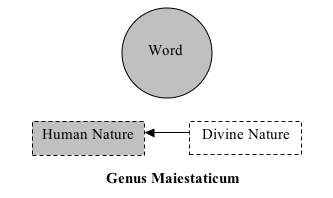
The ladies in my Bible study are un-pointy headed. They would not be interested in a "doctrinally rigorous" or "theologically challenging" Bible study. They find life more than rigorous and challenging enough, and so do I. Somehow, TDP, that book with so few female contributors and no handbag references (and which even elides the hilarious part about Jezebel putting on her face), manages to get us talking and thinking every time we get together. Neither they nor I nor my very very very smart friend ever long for a good long bull session over the non-reciprocity of the second genus.

Theology as an academic discipline has nothing more to do with personal devotion and piety than molecular biology does. We are free in the Gospel to find theology fascinating or unfascinating. Theology is no more erudite than any other subject of human inquiry (languages are theology's only considerable demand upon technical skill rather than acquired knowledge). Our interests, which we rich Americans are often privileged to make into our fields of study and work, color our lives and are a gift we can make to those around us. But intellectual or devotional taste is a strange criterion by which to assess the intelligence of others. Whether the road to hell is paved with the skulls of bishops remains to be seen, but if it is, I bet a whole bunch of those skulls are pointy. You should have seen my friend's killer outfit the day she defended her dissertation, not a paragraph of which could I understand.

Girls just wanna have fun!

Monday, May 18, 2015

Piety by Pinterest: Morning Prayers


I did not go looking for this so as to be reactionary, but having bumped into it honestly, I reacted. 

Let's start with the control group. Here is Martin Luther's morning prayer:


"I thank you, my heavenly Father, through Jesus Christ Your dear Son, that You have kept me this night from all harm and danger, and I pray that You would keep me this day also from sin and every evil, that all my doings and life may please You. For into Your hands I commend myself, my body and soul, and all things. Let Your holy angel be with me, that the evil foe may have no power over me. Amen"

The essence of this prayer is asking and thanking God for his protection against danger, recognizing that sin is the greatest danger. Its posture is total vulnerability and dependence. Its goal is to make it through the day safe in God's grace.


"God, this is a new day. I freshly commit myself to the role you have invited me to play, as you are building your church in this world. I am awestruck again today that you include me in this grand life-giving, world-transforming endeavor. So today I joyfully offer you my love, my heart, my talents, my energy, my creativity, my faithfulness, my resources, and my gratitude. I commit all of myself to the role you have assigned me in the building of your church so that it may thrive in this world. And I will 'bring it' today. I will bring my best. You deserve it. Your church deserves it. It is the Hope of the World."


The essence of this prayer is asking God to capitalize on the pray-er as much as possible. It sounds like the only danger this person faces is missing out on some speck of greatness she may have forgotten to put on her calendar. Its goal is to make it through the day having earned every gold medal there was to be had, for Jesus.

This second pray-er is playing for Team Church, so that's good. The prayer's optimism is not inconsistent with the hope that we have in Jesus and expecting good from God in every situation. But the difference between the two prayers is that the first proceeds from the theology of the cross; a position of complete humility: Nothing in my hand I bring/Simply to Thy cross I cling. All the first pray-er has to offer is her sin. The second wants to make sure the Lord knows that he's welcome to cash in on all those big MYs. 

But My creativity is not something I'd feel comfortable talking up to the Creator. I am not inclined to offer God my faithfulness or my best when He has explicitly told us  that all that belongs in the dumpster where it won't stink up the house. Considerations like these don't put me in the mood to start my day by telling Herr Gott allmächtig that I'm going to "bring it".

Luther's prayer is one I could pray no matter what my circumstances. Waking up alive is the only qualification for offering that prayer. The second prayer is one I would have a hard time praying on a day when I am sick or grieving or only have such un-transformative tasks ahead of me as the basic maintenance of order to which my lowly duties amount.

Well, here it is morning. Gloria patri!

Wednesday, April 22, 2015

Dear LadyLike: Daily devotions

Dear LadyLike,

Can I ask your gentle opinion, Christian women? Don't gasp... I don't often do a personally daily devotion/Bible reading. I go in streaks. I'm in an off streak--feeling sad that my Bible has become my "night stand". I'd like to do it in the morning, but find myself sleeping until I am awakened to an emergency every morning. I'd like to do it before bed, but find myself so very exhausted. During the day, I feel like I'm putting out one fire after another. And during "rest time," there's the bills to pay, school work to correct, laundry to fold. But, I feel guilty about it. At the same time, God is still feeding me. My husband reads the Bible aloud at breakfast everyday. Most days, I read a bible story to the children in conjunction with school. I have a bible verse calendar that I flip every day where I do dishes. There's church and Bible class. So, then I content myself to not have a personal devotion, thinking that there are seasons in life. I really don't know if contentment vs. guilt is Satan's temptation in my weakness, or the Lord's comfort for the weary. To some extent, I realize that thankfully, my need for God's Word will never be satiated, but how to balance everything in this world? I welcome your Gospel-centered discussion on this.


Dear Devoted Lady, 

Navigating the strait between a clear conscience and false guilt is always tricky. You have a lot of Word in your life, and you're also right that there's always room for more. At the same time, if it's OK for Christians to knit silly hats or go to elephant polo matches (and we think it is), it means that we don't have to devote every free minute to, um, devotions.

The center of Christian devotion is the Divine Service. Our most intimate access to God is in the Lord's Supper, where we are physically incorporated into His holy Body. This is our anchor for personal piety, and it helps us keep our perspective. Christian traditions in which the Lord's Supper is only symbolic have to look for divine intimacy somewhere else, and they find it in private prayer. That's how this whole thing has gotten confusing.

But prayer is still a duty of and a gift to every Christian. Jesus teaches us to pray for daily bread. This tells us that prayer is a daily event in the Christian life. Maybe your dilemma is also best faced on a daily basis. If there's ever a time in your day when it strikes you that a little push of Christian discipline might mean a few minutes for personal prayer and the Word of God, go ahead and push. If that time never comes, reflect on the Word that the Lord brought you that day in the normal life of a Christian family, and go to sleep at once and in good cheer.

LadyLike

Tuesday, April 14, 2015

Pray tell

Hello. I am an antiquated person who does things wrong, such as posting posts way longer than anyone would read without any real effort toward Pinnability. Nice to meet you! :) Rebekah


I get flummoxed by popular perceptions of prayer, by which I mean, people seem to think they pray a lot. You sure bout that? Prayer is hard, it is a discipline, it is deliberate. It is not "the hopes and the dreams of all."

A medium time ago, I watched Bruce Almighty, a movie in which "God" and "prayer" are central concepts, though our Lord surely is not. Prayer is actively portrayed once in the movie, at the end, by Jennifer Aniston. As I remember it, she gets weepy on her bed with a pillow and asks "God" to help her get through something hard.

I was fascinated by this scene. How does someone with a personally invented creed come to the point of actually offering a prayer? That point is so pointy. It is truly an act of faith to speak to someone you don't KNOW exists. It proves that you are certain enough of things unseen to do something that would otherwise be the height of foolishness. It differs from going to church because at church you are sharing the risk with other people. Praying privately has the same feeling you get when you fall on the ice behind your house with no one else there. (One Epiphany I did that with a King Cake. Cake totally stuck the landing.)

So prayer is an expensive thing to ask of someone, or at least, it is an expensive thing to ask of me. I know it shouldn't be, and I know I'm terrible, but there have been times when I've felt very burdened by someone's request for prayer. Especially if the request is from someone I don't know well, or on behalf of someone I don't know well or at all, I've sometimes wanted to say:
"Dear Christian, I am nowhere near as good as you. There have been vast stretches of my supposedly really Christian life when I have barely attended to prayer at all. I often struggle to begin my day even with the smallest of prayers. I hate days when all I do is shoot up sporadic selfish petitions which amount to little more than asking God to give presents to some of my friends. I am straight-up ashamed when someone else talks about praying for something daily. So, to be honest, I'm probably not going to pray for that problem of yours I don't really care about when I have such a hard time praying for the things I care about more than anything."
And then there are all the thank yous for prayers that are "working," and people calling you a prayer warrior, and so many other prayer-related ideas that just sit funny with me  . . . .

I don't even know if it's allowed to be as bad at praying as I am. Is it better to pray in an impious posture than not to pray at all, or does an irreverent position indicate that I'm not really serious about praying and therefore cancel out the whole thing? If I pray hungry and end up thinking about a banana the whole time would it be too spiritually tacky to just eat the banana first and be able to focus? If I pray the prayers of my heart, was it my good heart or my bad heart? Etc.


I'll try to say a few helpful things. First, all corporate worship is prayer. If you went to church, you prayed. If you went to your school's or VBS's chapel, you prayed. Family prayers are also prayer. Meal prayers are real prayers, not just something we do to look more Christian. Those things count.


But I am still mostly talking about personal prayer. I totally did not understand prayer books when I first learned there were such things. I learned to pray the American way, which is to say, making it up as I went with the primary goal of keeping it real. The trouble is that real me is real dumb and also impossible to distinguish from not-real me. 

So when I hazarded to open a prayer book, I learned that their prayers did not sound much like my "real me" prayers. The two I came to rely on most, Starck and Loehe, were in some ways even MORE about me than "my" prayers had been. They went on and on about my sins, something I had spent time on in the past but not nearly as much as I'd spent asking for, well, presents for my friends. But in going on about my sins, the prayer books ended up going on FAR more about Christ than my own prayers had ever done. They were worshipful and confessional (broadly speaking) and jammed with Scripture, if I knew my Scripture enough to recognize it, and if I didn't recognize it, they were still teaching me to pray with the Wordful words of God. I have found prayer books really helpful for pray-er's block. I use Loehe more than anything. And while I'm doing commercials, why is it so easy to forget that Psalms is the church's original prayer book which, being inspired, will never expire? Psalms! Pray them!

My colossal impiety is surely operative in my thinking that a lot of people who think prayer is natural and/or easy don't really know what prayer is. I know that telling myself I pray all day long is, for all practical purposes, a just plain lie (maybe someday it won't be if I ever learn how to/ make myself really pray, but for now it's a lie). I know I probably shouldn't have written any of this since I still haven't read that Kleinig book, but I probably shouldn't have ever written anything.